

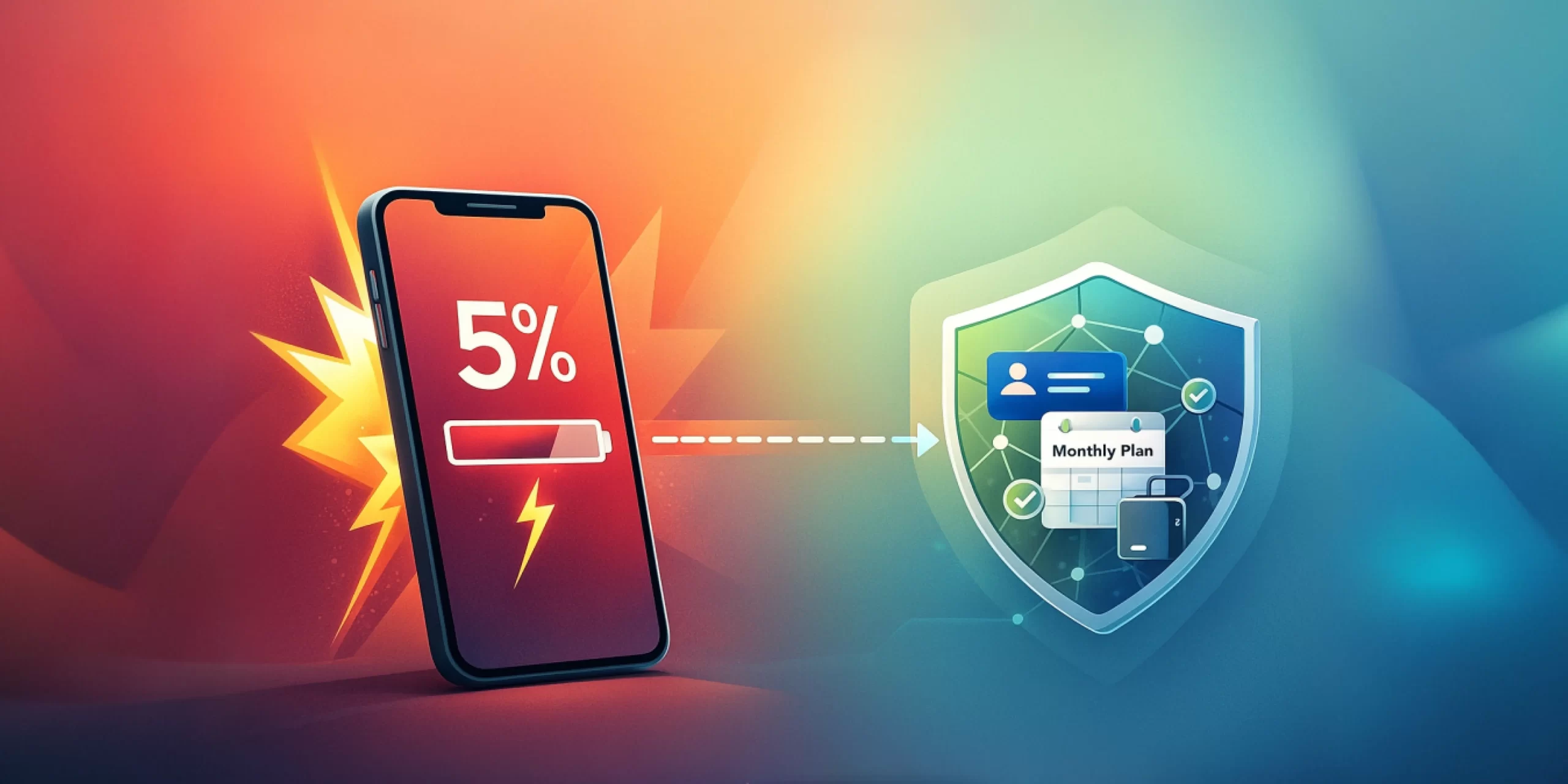
Have you ever watched a customer, phone in hand, quickly scan the storefronts in your hallway, their eyes searching for something specific? They’re on a mission. In a previous blog, “Why They Walk Next Door: The ‘5% Battery’ Decision,” we explored the psychology behind these critical seconds and how to win that immediate, emergency-driven rental.
But what happens after you’ve won that race against time? The customer’s phone is charged, the crisis is averted, and they go about their day. This success, while crucial, is often a one-off. It leaves us with a more strategic question: how do we transform that single, panic-driven transaction into a long-term, reliable stream of revenue?
The answer lies in shifting our focus from capturing emergencies to cultivating habits. This blog will explore how to use membership systems, subscription models, and strategic partnerships to turn your power bank service from a “lifesaver” into a customer’s trusted “backup battery,” creating a stable cycle of repeat business and significantly increasing their lifetime value.
Part 1: From “Lifesaver” to “Long-Term Reliance”: Why “Habit” is More Valuable Than “Emergency”
1. The Limitation of “Emergency Mode”: User decisions are based on panic, leading to low brand loyalty. Your business is constrained by the occasional nature of a dead battery. Revenue becomes unpredictable.
2. The Superpower of “Habit Mode”:
- For the User: It provides “battery security,” reducing daily anxiety. It simplifies decisions and enhances overall convenience.
- For the Merchant: It increases Customer Lifetime Value (LTV); creates stable revenue streams (e.g., subscription fees); boosts in-store foot traffic and dwell time; and generates income even in non-emergency scenarios.
3. The Core Shift: Reposition your charging service from a “firefighter” for emergencies to a “backup generator” for your customers’ digital lives.
Part 2: The Three-Step Engine for Habit Formation: Make Users “Remember, Prefer, and Return”
Engine 1: The Mental Anchor—From “Invisible” to “Ever-Present”
Problem: Users only think of you when their battery is dead. When it’s charged, you effectively disappear from their world.
Strategy: Use a membership card, mini-program, or app to create a strong association between your brand and “battery security.” Make it a “virtual charging station” permanently residing on their phone.
Example: After a user returns a power bank, send a push notification: “Your member points have been credited!” or “Your next rental is 20% off,” instead of just a transaction receipt.
Engine 2: Value Lock-in—From “Calculating Cost per Use” to “Valuing the Long-Term”
Problem: With single rentals, users re-evaluate “is it worth it?” every single time.
Strategy:
- Tiered Memberships: Silver, Gold, Platinum. Higher tiers offer longer free periods, bigger rental discounts, and more partner benefits. This motivates users to climb and maintain their status.
- Subscriptions & Packages: e.g., “Monthly Pass: 1 free hour daily,” or “10-Rental Package.” Users pre-pay for “future convenience,” locking in their future behavior.
- Points System: Earn points for rentals, daily check-ins, and in-store purchases. Points can be redeemed for rental time, store coupons, or cross-promotional gifts. This increases stickiness and sunk cost.
Engine 3: Scenario Penetration—From “Single Scene” to “Omni-Channel Coverage”
Problem: A user only has the habit of renting from your single location.
Strategy:
1. Build a “Preferred Network”: Form an alliance with complementary local businesses (cafes, bookstores, gyms). Members enjoy unified benefits across the alliance, making them feel your “charging stations are everywhere.”
2. Scenario-Specific Bundles: Integrate charging with your core business. For example:
- Restaurant: “Lunch Combo” includes 1 hour of free charging.
- Cafe: “Remote Work Package”: A coffee + a seat + 3-hour charging discount.
- Cinema: “Movie Night Package”: Ticket + snacks + discounted power bank rental.
This seamlessly weaves your charging service into the various fragments of your customer’s life.
Part 3: The Practical Playbook: Implementing “Habit-Forming” Mechanics in Your Store
Step 1: Assess Your User Base
Analyze your backend data: What characterizes your high-repeat users? When do they typically rent?
Step 2: Design Your “On-Ramp Hook”
Immediately after a user’s first (emergency) rental, pop up an offer: “First time? Become a monthly member for just $X and this rental is FREE!”
Step 3: Choose and Launch Your Core Mechanism
Beginner: Start simple with a “Multi-Rental Pack” (e.g., buy 5, get 1 free) or a “Monthly Discount Card.”
Advanced: Develop membership perks tied directly to your main business, e.g., “Power Bank Members get 10% off all drinks.”
Step 4: Create a “Network Effect”
Talk to friendly neighboring businesses about forming a small “Merchant Charging Alliance” to cross-promote and share member benefits.
Conclusion: “Emergency” in One Hand, “Habit” in the Other—Building an Unshakable Moat
To summarize, the first blog taught us the “art of fishing”—how to expertly catch the fish swimming by in a panic. This blog teaches us the “art of fish farming”—how to build a pond that keeps the fish and makes them consistently valuable.
A truly successful merchant is one who masters both: using a clear storefront to capture the “5% battery” emergency, and using a thoughtful membership system to cultivate the “95% battery” backup habit. When customers see you not just as a crisis solver, but as a reliable partner in their digital life, what you gain is far more than side income—it’s sustained customer flow, solidified relationships, and a powerful engine for growth.