

A power bank rental business starts with a simple idea: place rental kiosks in high-traffic venues so users can solve low-battery moments quickly, while operators earn repeat rental revenue. Common revenue models include hourly rental fees, daily caps, and long-duration charges.
But this opportunity is not only about demand. Operators also need to evaluate venue fit, station reliability, payment flow, maintenance, and ROI drivers. This guide explains the business from both product and commercial perspectives.
Quick Takeaways:
- Demand is frequent in high-traffic venues.
- Revenue depends on rental frequency and pricing rules.
- ROI is affected by station cost, venue mix, payment flow, and maintenance.
- Supplier choice matters because hardware, app, payment, and admin software must work together.
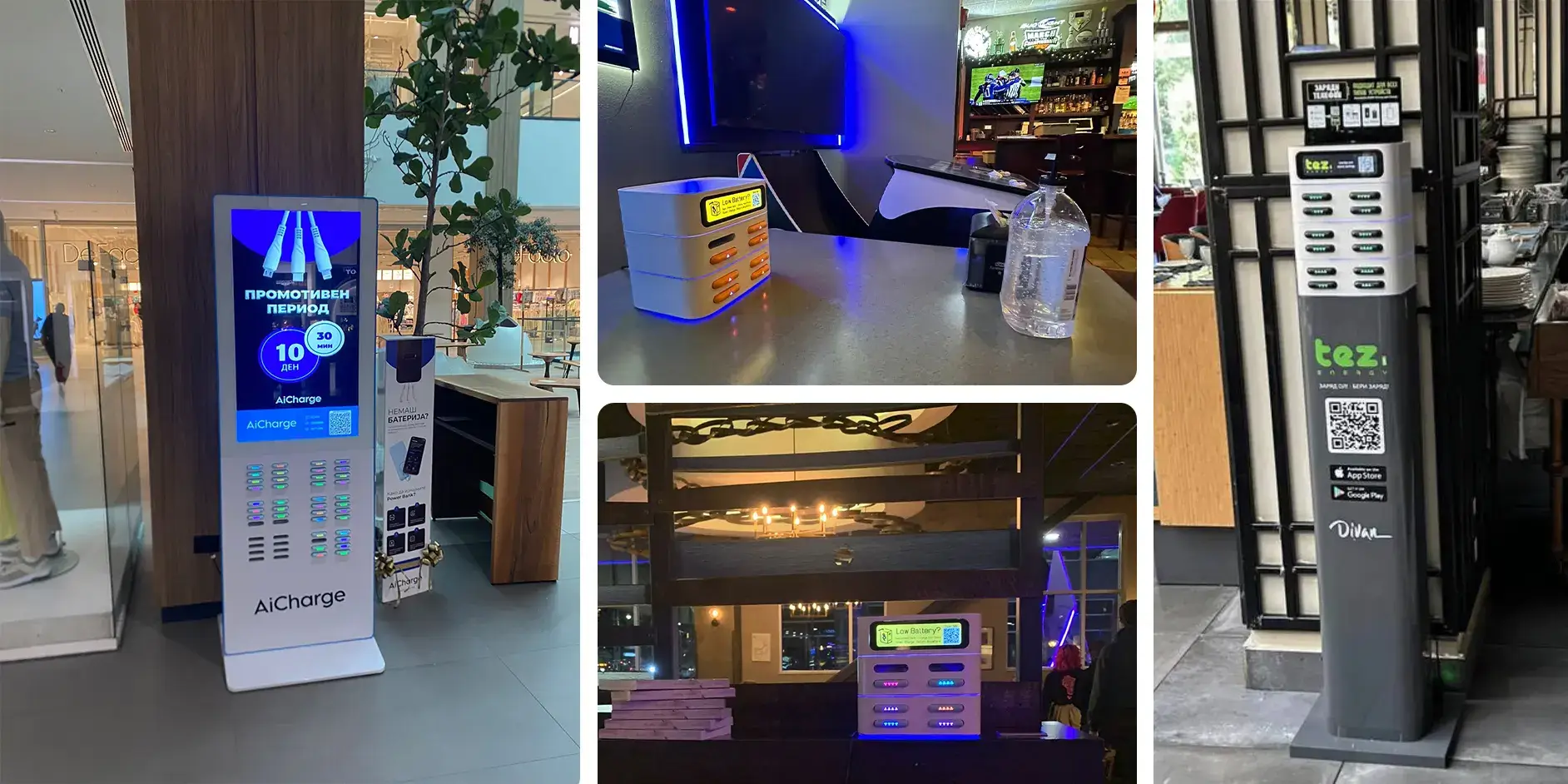
Table of Contents
Part 1: Product Perspective: Why the Demand Exists
A power bank rental business works only when the product solves a real, repeatable problem for users. From a product perspective, the opportunity depends on these factors:
- Addresses a Real Need: Effectively solves a widespread issue.
- High-Frequency, Valuable Pain Point: Resolves common, essential problems for consumers.
- Perceived Value: Consumers should immediately feel the benefit of using the service.
- Ease of Use: Quick and simple, saving time and effort.
- Reliability: Dependable and low-maintenance.
At first glance, these traits might sound abstract. Let’s break them down in the context of the power bank rental business.
1.1 Addressing Consumer Needs
For modern consumers, running out of battery is a significant pain point. In today’s fast-paced, smartphone-dependent world, many people start to feel anxious when their battery drops below 20%. Some even rush to find a charging spot when their battery reaches just 50%. The demand for charging is therefore a basic necessity.
The power bank rental business model perfectly addresses this need. Consumers can easily rent a power bank on the go, resolving their charging issues quickly and conveniently.
1.2 Solving a High-Frequency, Clear Pain Point
Running out of phone battery is a universal issue, especially in the modern digital age. Many smartphone users experience battery anxiety during travel, dining, shopping, events, or business trips, which makes charging access a practical service rather than a novelty.
The power bank rental business service directly solves this problem with high frequency, making it a reliable business in markets where mobile dependency is high.
1.3 Users Perceive the Value
In markets like China, shared power banks have become an integral part of daily life. Whether in subway stations, restaurants, or shopping centers, powerbank rental kiosks are ubiquitous. Consumers in these locations can rent power banks at their convenience, completely eliminating the stress of low battery.
This “always-charged” environment makes shared power banks an essential service, ensuring customers feel the value of this solution in their everyday lives.
1.4 Ease of Use & Time Saving
The rental process for shared power banks is simple and efficient, designed to save users time and effort:
- Step 1: Scan the QR code on the rental machine.
- Step 2: Link a payment method (supports over 60 payment options).
- Step 3: Complete payment and take the power bank.
- Step 4: Return the power bank at any compatible rental station in the network.
This straightforward process only takes a few minutes, allowing users to solve their battery problems quickly while saving valuable time and effort.
1.5 Reliability and Stability
The maintenance of power bank rental kiosks is critical. Most kiosks are located in indoor, high-traffic areas, which are easier to maintain and less prone to damage or theft. This setup ensures a stable environment for operators, reducing maintenance and repair costs.
This stability is an essential factor for long-term business sustainability, especially in regions with high foot traffic.
This is also where supplier selection becomes important: operators need reliable station hardware, remote management, payment integration, and after-sales support.
Business Model Snapshot: How Power Bank Rental Makes Money
- Revenue model: hourly fees, daily caps, long-duration charges.
- Venue model: malls, restaurants, hotels, events, and transport hubs.
- Cost model: station hardware, power banks, software, payment, maintenance.
- Payback drivers: rental frequency, pricing, station uptime, and venue mix.
Need to compare station types before estimating ROI? View HeyCharge power bank rental stations.
Part 2: Business Perspective: ROI, Venue Fit, and Operating Risks
The power bank rental business is not exclusive to China; it’s a global opportunity. In China, the industry has been widely adopted, with successful business models proving its profitability. For example, Monster Charging, the largest shared power bank company in China, went public and generated RMB 2.8 billion in revenue in 2020, despite the pandemic, with a net profit of RMB 75.4 million.
Additionally, companies like Zhumang have also seen success with powerbank rental business platforms, with daily order peaks reaching 3 million rentals per day. Despite the low rental fees, operating costs are minimal, and the indoor setup of the kiosks helps improve the profitability of a power bank rental business when station utilization is high.
2.1 Financial Profitability Analysis
Assuming an hourly rental fee of $2 and the cost of a small power bank rental kiosk ranging from $120 to $180, here is a simplified example to help beginners understand the basic payback logic:
- If a station is rented out twice a day, it will break even in just 60 hours.
- As rental frequency increases, profits will grow exponentially. For example, in a high-traffic shopping mall, a kiosk rented out three times per day will see a significant return on investment.
Moreover, businesses that collaborate with shared power bank providers typically don’t need to pay additional rental fees. Instead, the rental machine can drive foot traffic, increasing the store’s exposure and ultimately benefiting both parties. This results in a win-win scenario for businesses and rental service providers.
For a more realistic calculation, see our detailed EBITDA-based power bank sharing ROI model.
2.2 Risks and Challenges
Despite the high profit potential, there are some risks to consider:
Low Frequency of Use: As phone battery capacities increase, not all consumers will experience frequent low battery issues. Therefore, while the need for charging remains, not every consumer will use the service daily.
Low Average Transaction Value: With low rental fees and short rental durations, the average transaction value remains relatively low. Increasing the average transaction value or offering value-added services will be key for businesses looking to optimize profitability.
Conclusion
From both a product and financial perspective, the power bank rental business offers a high-potential solution to a widespread problem. With low operating costs and high scalability, this business model is well-positioned for profitability. While there are some risks, these can be managed through optimized operations and strategic market approaches.
If you are evaluating whether to start a power bank rental business, HeyCharge can help you compare station models, software, payment options, OEM branding, and deployment plans before launch.